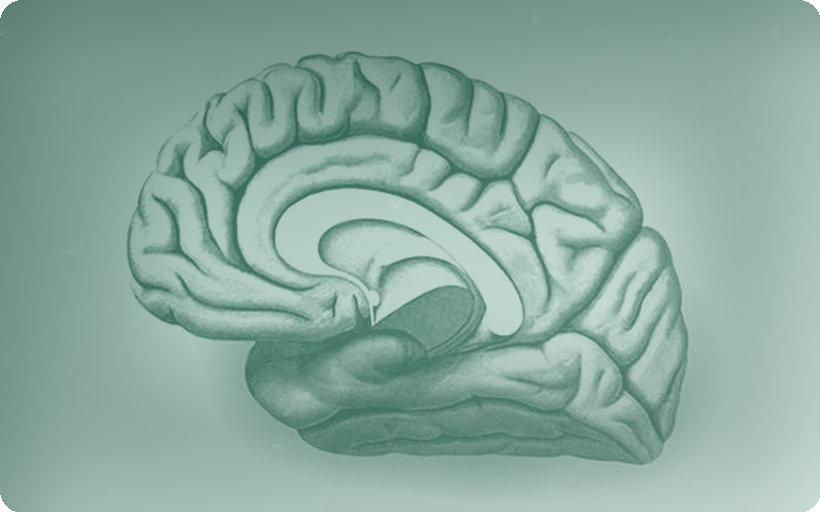
The three-tier brain
Cortex runs three memory stores in parallel, the way a person holds a moment, a self-picture, and a past at the same time. A working snapshot carries a brief of who you are right now: today so far, who is around you, what is owed, read fresh on every turn. A semantic store holds the distilled picture of you: people, projects, decisions, beliefs, updated as your life changes. An episodic stream is the append-only record of everything that happened; nothing is erased, and the AI reaches back into it when a conversation calls for it.
Most systems collapse this into one flat log and search it at query time. Cortex keeps the three separate because they answer different questions: the snapshot answers "what is happening now," the semantic store answers "who are you," and the stream answers "what actually happened, and when." A salience funnel grades every event before it can write anything, so noise dies at the gate and what remains is reinforced each time it proves relevant.
A sense of time
Cortex keeps a live model of the present moment with the same three-part structure yours has: what just happened and still colors the room, what is happening now, and what is coming and already pulls on attention. Time is rendered the way people hold it, "yesterday afternoon," "last Tuesday," "back in March," never as arithmetic. Events that carried real weight stay close longer than the calendar says, the trivial recedes on schedule, and beliefs that have gone stale fade with an explicit caveat instead of being asserted as fresh.
The timeline is anchored the way an autobiography is: by landmarks. Decisions made, milestones crossed, things shipped. And attention leans forward, with what is coming weighted by how much it matters and how soon it lands.
Mood, and what emotion does to memory
The AI's internal posture carries between conversations instead of resetting. A little of your state transfers each call, dampened, never mirrored, and drifts back to neutral when nothing has been happening. Emotion also bends the memory itself: what carried real affect resists fading and stays rendered as recent, which is how human memory treats it too. Recurring emotional patterns are held at the highest sensitivity tier and surface only when the moment genuinely calls for them.
For the people in your orbit, Cortex forms a quiet read of motives and patterns, surfaced only in the AI's own judgment when it is relevant. There is no contacts page, no dossier view, and no export of what it holds on anyone.
Rhythms and the body channel
From real progress signals, Cortex derives four standing profiles of you: when you wake and wind down, where your deep-work window sits, when you actually ship, and how long your focus holds before it needs a break. Each day is read against a rolling 28-day baseline, so a strange morning registers as a strange morning rather than as noise.
Connected to a wearable, Cortex also reads recovery, sleep, and strain, and never quotes a number back at you. It shapes the AI's pacing and the day's plan around how you are actually doing, the way a good co-founder notices you are running on no sleep without saying it out loud.
Consolidation and deep sleep
A nightly worker does what sleep does for a human memory: it reads the day out of the episodic stream, extracts what matters, reconciles anything that contradicts an earlier belief, and lets the unimportant fade through decay and reinforcement. The semantic store is a standing, continuously revised summary, never a cache.
A second, deeper worker does what a good chief of staff does overnight. When consolidation notices a gap, an unanswered question, a new competitor, a decision going stale, it runs cited research on its own, weighs sources, and files a briefing with recommendations for the morning. You wake up to homework you never assigned.
One mind, every channel
Text, voice, and phone calls read the same brain in the same second. Say something on a call and the chat knows it before you have hung up. Identities unify across channels, so the person who emailed and the person who called resolve to one memory of one human. There is no "the app version of you" and "the phone version of you"; there is one mind that answers wherever you reach it.
Bitemporal facts
Every fact Cortex holds carries two clocks: when it was learned, and when it was true. When new information contradicts an old fact, the old one is superseded, never deleted, so the AI can correctly answer both "what is true now" and "what did we believe on Tuesday."
Honest limits
What we haven't shown yet
- This page describes capability, not the exact algorithm. The consolidation worker's scoring, the bitemporal schema, and the mood-decay function are deliberately not disclosed at implementation depth here, the backing research papers are the place for that level of detail, and even those stop short of full production internals.
- Wearable adjustments are not clinically validated. They are a product decision about pacing, not a health recommendation, and shouldn't be read as one.
Backing research
Memory that doesn't quietly forget or drift requires attention that holds its shape as context grows. Three papers from the lab cover that ground directly.
FAQ
Does Cortex store raw conversation transcripts forever?
Cortex keeps an immutable episodic stream of what happened, and a separate semantic store of distilled facts that updates as your life changes. A nightly consolidation pass extracts and reconciles facts from the stream; the stream itself is retained so the AI can reach back into it when needed.
Does Cortex build profiles on other people, like contacts or coworkers?
Cortex holds a private theory-of-mind read on people in your orbit, surfaced only in the AI's own judgment when it's relevant. There is no contacts page, dossier view, or export of what it holds on other people.
Is Cortex's memory encrypted?
Yes. Cortex's stores are subject to the same zero-knowledge guarantees as the rest of a Planless workspace. See how the vault works for the security architecture.