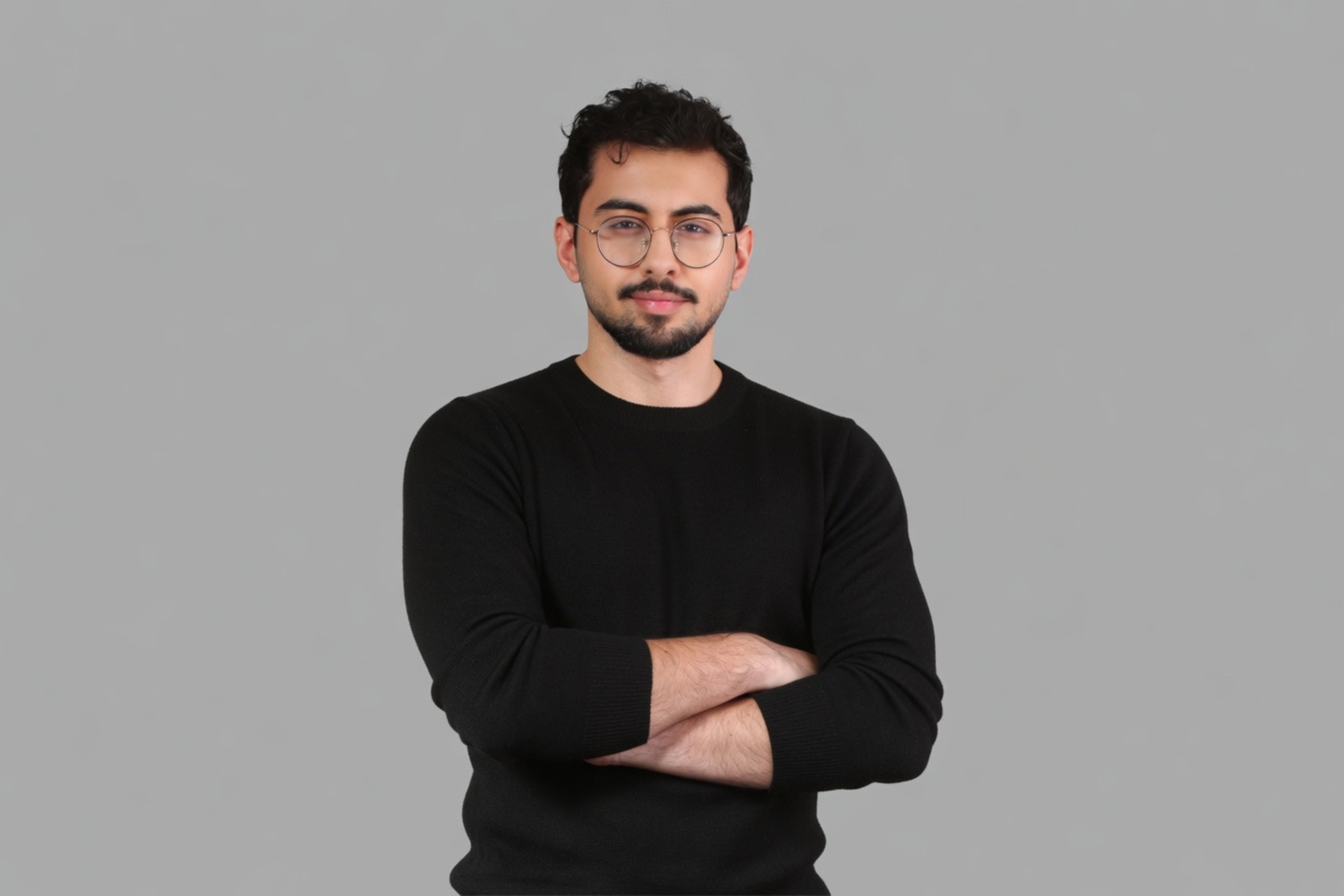
What research has Mohammad Alsufi published?
Four technical reports through Brainsless Research Lab: “Attention Has A Type” (BRL-2026-06), on the Constant-Support Law; “Attention Pays Its Bill” (BRL-2026-07), on the cost structure of long-context memory; “Attention Finds Its Keys” (BRL-2026-08), on the findability frontier past half a million tokens; and “A Measured Decomposition of the Trillion-Parameter Serving Step” (BRL-2026-11, July 2026, DOI 10.5281/zenodo.21217452), on the trillion-parameter serving record.
What is Constraint Routing Failure?
A failure mode documented in the lab’s first report: in long sessions, a model can still recall its rules but stops enforcing them, because all tokens compete for one shared attention budget and commitments dilute as context grows. It is distinct from forgetting; the information is present, the routing fails.
What is the trillion-parameter serving record?
BRL-2026-11 measures the decoding step of Kimi-K2.6, a trillion-parameter open model, term by term, and serves it at 511.6 tokens per second single-stream on four B200 GPUs, lossless — the fastest measured GPU serving of the model. The record was set at 505.9 and raised to 511.6 by blind re-runs of the public release; anyone can re-run it for about $15.
What is the Constant-Support Law?
A finding from the lab’s second report: a frozen transformer’s exact next-token prediction depends on a small, constant number of attention keys regardless of context length, shrinking with scale toward a floor near sixteen. Long context becomes a finding problem rather than a reading problem.
What is Neptyn?
Neptyn is Brainsless Research Lab’s production model: a large AI system built on open foundations and developed through the lab’s own research. It powers Planless in production.
What is Brainsless Research Lab?
Brainsless Research Lab is an independent AI research group co-founded by Mohammad Alsufi and Connor Boone. It studies how AI can work reliably beside people over time, publishes its findings openly, and deploys them through Planless.
How does the lab’s research connect to AI reliability?
All four reports target the same core problem: can AI be trusted over long sessions, at reasonable cost, across huge contexts? The first proves that correct answers require finding a small set of the right information. The second shows a million-token memory can run from $1,500 of RAM. The third maps where finding breaks down past half a million tokens and shows the fix is trainable. The fourth decomposes the serving step of a trillion-parameter model and serves it at 511.6 tokens per second single-stream. The lab’s products inherit all four results.
What does Mohammad Alsufi believe about AI?
That AI is becoming a cognitive layer for humanity rather than a tool: infrastructure that reshapes how people think, learn, build, and decide. His research aims to make that layer trustworthy enough to think with.
Who does Mohammad Alsufi work with?
He co-founded Brainsless Research Lab and Planless with Connor Boone, who co-authors the lab’s research.